Traffic congestion has become one of the defining challenges of modern urban life, affecting billions of people daily and reshaping how cities function and evolve.

🚗 The Growing Crisis of Urban Traffic Congestion
Anyone who has sat in bumper-to-bumper traffic knows the frustration firsthand. But traffic congestion is far more than a simple inconvenience—it’s a complex problem that touches every aspect of urban existence. As cities continue to expand and populations surge, the vehicles on our roads multiply at an alarming rate, creating gridlock that threatens the very fabric of metropolitan life.
The World Bank estimates that traffic congestion costs the global economy hundreds of billions of dollars annually. In major metropolitan areas, commuters can spend upwards of 100 hours per year stuck in traffic. This isn’t just time lost; it’s productivity squandered, fuel wasted, and quality of life diminished. The ripple effects extend far beyond the individual driver, impacting businesses, healthcare systems, environmental sustainability, and urban planning for decades to come.
Understanding the multifaceted impact of traffic congestion requires examining how it affects different dimensions of modern life. From the personal toll on mental and physical health to the broader economic consequences that reshape entire industries, gridlock represents one of the most pressing urban challenges of our time.
💼 Economic Consequences That Extend Beyond the Road
The economic impact of traffic congestion operates on multiple levels, creating a cascading effect throughout the entire economic ecosystem. When delivery trucks sit idle in traffic, supply chains slow down. When employees arrive late or exhausted, productivity suffers. When goods take longer to reach markets, prices increase for consumers.
In the United States alone, traffic congestion costs the economy over $120 billion annually according to recent studies. This figure accounts for wasted fuel, lost productivity, and delayed freight shipments. Major cities bear the heaviest burden—Los Angeles, New York, and San Francisco routinely top the lists of most congested urban areas, with each city losing billions in economic output every year.
The Business Perspective on Gridlock
Businesses face particular challenges when operating in congested urban environments. Logistics companies must factor in unpredictable delivery times, often requiring them to maintain larger fleets and employ more drivers to meet service commitments. Service-based businesses struggle with scheduling appointments when travel times become unreliable. Even office-based companies feel the impact through reduced employee satisfaction and difficulties attracting talent who face lengthy commutes.
The rise of the gig economy and on-demand services has added new dimensions to this challenge. Food delivery drivers, ride-sharing operators, and mobile service providers all see their earnings directly impacted by time spent in traffic. Their ability to complete jobs efficiently determines their income, making congestion a direct threat to their livelihood.
🌍 Environmental Impact: The Hidden Cost of Idling Engines
While we can measure economic losses in dollars, the environmental consequences of traffic congestion present an even more sobering picture. Vehicles stuck in stop-and-go traffic operate at their least efficient, consuming more fuel and producing disproportionately higher emissions than when moving at steady speeds.
Urban air quality suffers dramatically in congested areas. Nitrogen oxides, particulate matter, and carbon monoxide concentrate along major traffic corridors, creating health hazards for nearby residents. Studies have linked proximity to congested roadways with increased rates of asthma, cardiovascular disease, and other respiratory conditions, particularly among children and elderly populations.
Climate Change Acceleration
Traffic congestion contributes significantly to greenhouse gas emissions. In congested conditions, vehicles can emit up to twice the carbon dioxide they would produce traveling at optimal speeds. Multiply this inefficiency across millions of vehicles in hundreds of cities worldwide, and the climate impact becomes staggering.
Many cities have recognized this connection and are implementing policies to reduce both congestion and emissions. Congestion pricing zones, low-emission vehicle incentives, and expanded public transportation networks all aim to address these intertwined challenges. However, the scale of change required remains daunting, requiring coordinated efforts across government, industry, and individual behavior.
😰 Personal Health and Wellbeing in the Gridlock
Beyond economic and environmental concerns, traffic congestion takes a profound toll on individual health and quality of life. The stress of daily commutes in heavy traffic measurably impacts both mental and physical wellbeing.
Research consistently shows that long commutes through congested areas correlate with increased stress levels, anxiety, and depression. The unpredictability of traffic patterns creates chronic stress as commuters worry about arriving late to work, missing important meetings, or failing to pick up children on time. This daily anxiety accumulates, contributing to burnout and reduced life satisfaction.
Physical Health Implications
The physical health consequences extend beyond stress. Sitting in traffic means prolonged sedentary behavior, contributing to obesity, cardiovascular problems, and musculoskeletal issues. Poor air quality from vehicle emissions exacerbates respiratory conditions. Sleep patterns suffer when commutes extend working days to unsustainable lengths.
Studies have found that each additional minute of commute time correlates with measurable decreases in exercise, sleep quality, and social engagement. People with longer commutes through congested areas report lower overall happiness and life satisfaction. They have less time for family, hobbies, exercise, and community involvement—all factors that contribute to wellbeing.
🏙️ Urban Planning Challenges and Opportunities
Traffic congestion forces cities to confront fundamental questions about urban design, land use, and infrastructure investment. Traditional approaches of simply building more roads have repeatedly proven inadequate—induced demand means that new road capacity quickly fills with traffic, returning to congested conditions.
Progressive urban planners now recognize that solving congestion requires reimagining urban spaces entirely. This means creating mixed-use neighborhoods where people can live, work, and access amenities without lengthy car trips. It means prioritizing pedestrian infrastructure, cycling networks, and public transportation over private vehicle convenience.
The Role of Zoning and Development Patterns
Much of modern traffic congestion stems from outdated zoning practices that separate residential, commercial, and industrial areas. When homes, jobs, and services spread across vast distances, car dependency becomes inevitable. Reforming these patterns represents one of the most powerful long-term strategies for reducing congestion.
Cities like Copenhagen, Amsterdam, and Singapore have demonstrated that thoughtful urban planning can dramatically reduce car dependency while improving quality of life. These cities prioritized public transportation, created extensive cycling infrastructure, and implemented policies that make car ownership less necessary. The results include not only reduced congestion but also cleaner air, healthier populations, and more vibrant public spaces.
🚇 Public Transportation: A Critical Component of the Solution
Robust public transportation systems offer one of the most effective tools for reducing traffic congestion. A single subway train or bus can transport dozens or hundreds of people who might otherwise drive separate vehicles. Beyond raw capacity, good public transit provides equity—enabling mobility for those who cannot afford cars while giving everyone alternatives to driving.
However, public transportation only reduces congestion when it offers genuine advantages over driving. Systems must be frequent, reliable, comfortable, and comprehensive enough to serve diverse travel needs. Many cities struggle with this challenge, operating transit systems that serve limited areas on restrictive schedules, making them impractical for most residents.
Innovation in Public Transit
Modern technology enables new approaches to public transportation. Real-time tracking apps help riders plan journeys and anticipate arrivals. Integrated payment systems allow seamless transfers between different transit modes. On-demand micro-transit services fill gaps in traditional fixed-route systems, providing flexibility while maintaining efficiency advantages over private vehicles.
Navigation applications like Google Maps have revolutionized how people navigate congested cities, offering real-time traffic information and suggesting alternative routes. These tools help individuals make better decisions but also provide valuable data that cities can use to understand traffic patterns and identify problem areas requiring infrastructure improvements.
🚴 Alternative Transportation Modes Gaining Ground
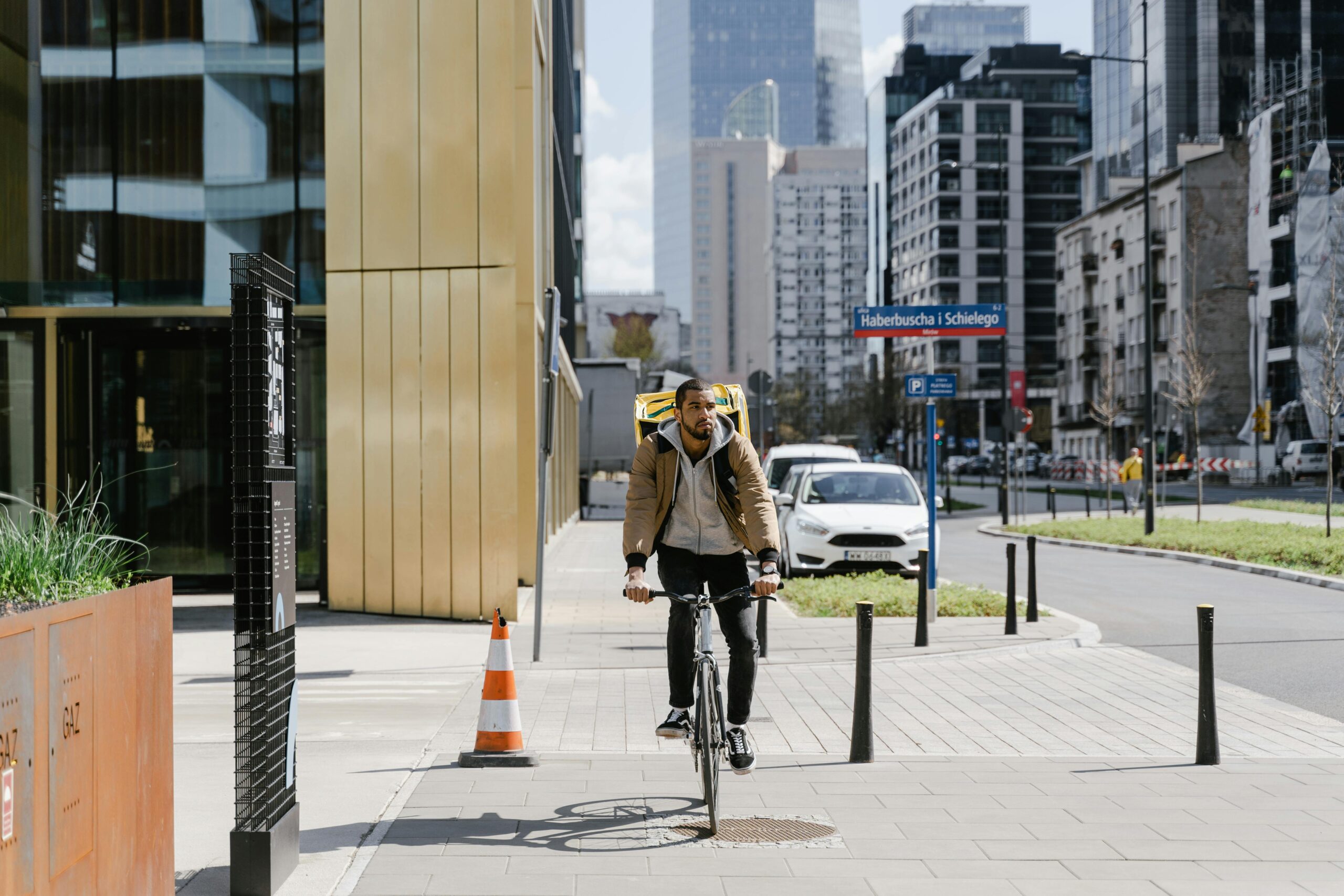
The past decade has witnessed explosive growth in alternative transportation options. Electric scooters, bike-sharing systems, and electric bikes have emerged as viable solutions for short and medium-distance urban trips. These micro-mobility options reduce car dependency while offering flexibility that public transit sometimes cannot match.
Cycling infrastructure investment pays substantial dividends in reduced congestion. Protected bike lanes and comprehensive cycling networks enable safe, practical bicycle commuting. Cities that prioritize cycling infrastructure consistently see modal shifts away from private vehicles, reducing traffic volumes while improving public health and environmental outcomes.
The Electric Revolution in Personal Mobility
Electric vehicles present both opportunities and challenges for congestion management. While they address environmental concerns associated with internal combustion engines, electric cars still occupy road space and contribute to traffic volumes. The true congestion-reducing potential of electric technology may lie in smaller vehicles—e-bikes, e-scooters, and other micro-mobility solutions that require less infrastructure and move more efficiently through urban environments.
🤖 Technology and Smart Traffic Management
Advanced technology offers powerful tools for managing existing road capacity more efficiently. Smart traffic signals that adapt to real-time conditions can optimize traffic flow. Integrated traffic management systems coordinate signals across entire networks, reducing bottlenecks and improving throughput.
Artificial intelligence and machine learning enable increasingly sophisticated traffic prediction and management. These systems analyze patterns from countless sources—traffic cameras, GPS data, weather forecasts, event schedules—to anticipate congestion and implement preventive measures.
The Promise and Complexity of Autonomous Vehicles
Autonomous vehicles represent perhaps the most discussed technological solution to traffic congestion. Proponents argue that self-driving cars could dramatically increase road capacity through coordinated movement, reduced following distances, and optimized routing. Vehicle-to-vehicle communication could enable smooth traffic flow without the human factors that create congestion waves.
However, autonomous vehicles also risk exacerbating congestion if they encourage more vehicle travel. If self-driving cars make commuting more pleasant by allowing passengers to work, relax, or sleep during trips, people might accept longer commutes, increasing overall vehicle miles traveled. Realizing the congestion-reducing potential of autonomous technology requires thoughtful policy frameworks that encourage shared autonomous vehicles rather than private ownership.
💡 Policy Interventions and Pricing Mechanisms
Economic tools like congestion pricing have proven effective in managing traffic demand. By charging fees for driving in congested areas during peak times, cities create financial incentives for people to choose alternative transportation modes, adjust travel times, or combine trips. London, Singapore, and Stockholm have successfully implemented congestion pricing with measurable reductions in traffic volumes.
These programs face political challenges—drivers resist paying for roads they’ve historically used freely. However, when revenues fund transportation improvements and programs demonstrate clear benefits in reduced congestion and improved air quality, public support typically grows. The key lies in transparent implementation, fair pricing structures, and visible investments in alternatives.
Parking Policy as Traffic Management
Parking policy represents another powerful but often overlooked congestion management tool. Much urban traffic consists of drivers searching for parking—studies suggest up to 30% in some areas. Reforming parking policies by pricing street parking appropriately, reducing minimum parking requirements for new development, and implementing smart parking systems that direct drivers to available spaces can significantly reduce unnecessary driving.
🌟 Reimagining Urban Mobility for the Future
Solving traffic congestion requires moving beyond incremental improvements toward comprehensive reimagining of urban mobility. This means creating transportation systems that seamlessly integrate multiple modes, making car-free or car-lite lifestyles practical and attractive for most residents.
The most successful approaches recognize that no single solution suffices. Reducing congestion requires coordinated strategies: improving public transit, building cycling infrastructure, implementing smart traffic management, reforming land use patterns, and creating economic incentives that encourage sustainable transportation choices.
Forward-thinking cities are embracing this holistic approach. They’re creating pedestrian-priority zones, implementing mobility-as-a-service platforms that integrate multiple transportation options, and planning neighborhoods where daily needs lie within walking or cycling distance. These transformations don’t happen overnight, but they offer pathways toward urban environments where congestion no longer dominates daily life.
🔮 Looking Ahead: The Transformation of Urban Transportation
The future of urban mobility will likely differ dramatically from today’s car-dominated landscape. Climate urgency, technological advancement, and changing preferences—particularly among younger generations—are converging to drive transformation. Successful cities will be those that embrace this change, investing in diverse, sustainable transportation options while reimagining urban spaces for people rather than vehicles.
This transformation presents both challenges and opportunities. It requires substantial infrastructure investment, policy innovation, and behavioral change. But the potential benefits—reduced congestion, cleaner air, improved public health, greater equity, and more livable cities—make these investments worthwhile.
Traffic congestion isn’t inevitable. It results from choices about how we build cities, design transportation systems, and allocate road space. By making different choices—prioritizing people over vehicles, sustainability over convenience, and long-term wellbeing over short-term ease—we can create urban environments where mobility enhances rather than constrains our lives. The path forward requires vision, commitment, and coordinated action, but the destination—cities where people can move freely, efficiently, and sustainably—is worth pursuing.